箏の文化KOTO CULTURE
箏を知る
Discover the Koto
一音の向こうに、受け継がれてきた時間があります。
歴史、歌、爪、柱。箏の響きを形づくる四つの物語をご紹介します。
Behind a single note is a tradition carried through generations. Explore four stories that shape the sound of the koto: its history, singing, picks, and bridges.
第一章 CHAPTER 01
箏の歴史
The History of the Koto
箏は奈良時代に中国大陸から伝わり、宮廷の雅楽で琵琶や笛とともに奏でられました。平安時代には貴族の管弦や物語の中にも姿を見せ、やがて箏を伴奏に歌う音楽が育ちます。江戸時代、八橋検校が調弦や作品を工夫して箏曲の礎を築き、生田流や山田流へと受け継がれました。明治以降も新しい作曲や西洋音楽との出会いを重ね、今日の箏は古典の響きを守りながら、多彩な舞台で奏でられています。
The koto reached Japan from the Asian continent in the Nara period and was played alongside flutes and biwa in court music. It later appeared in Heian court life and literature, while songs accompanied by koto took shape. In the Edo period, Yatsuhashi Kengyō helped establish the foundations of koto music; the Ikuta and Yamada schools followed. New compositions and encounters with Western music have continued to widen its expressive world.
第二章 CHAPTER 02
山田流とは
The Yamada School of Koto
山田流は、江戸時代後期に山田検校(1757–1817)が江戸で興した箏曲の流派です。山田検校は、江戸の浄瑠璃などに親しむ人々の耳に寄り添い、物語を歌で伝える曲を作りました。山田流では歌の言葉と節回しを大切にし、箏は声と呼吸を合わせて響きます。一方、生田流には地歌三味線との合奏で器楽的な表現を磨いてきた歩みがあります。どちらも同じ十三弦の箏を用い、異なる芸の蓄積を今に伝えています。
Yamada Kengyō (1757–1817) founded the Yamada school in late Edo-period Edo. Drawing on the city's narrative singing traditions, he created koto music in which words and melody carry the story. Singing remains central to the Yamada tradition, with the instrument responding to the voice. The Ikuta school developed a different emphasis through its close relationship with jiuta shamisen and instrumental ensemble playing. Both traditions use the thirteen-string koto and bring their own artistry to it.
第三章 CHAPTER 03
箏爪のかたち
The Shape of Koto Picks
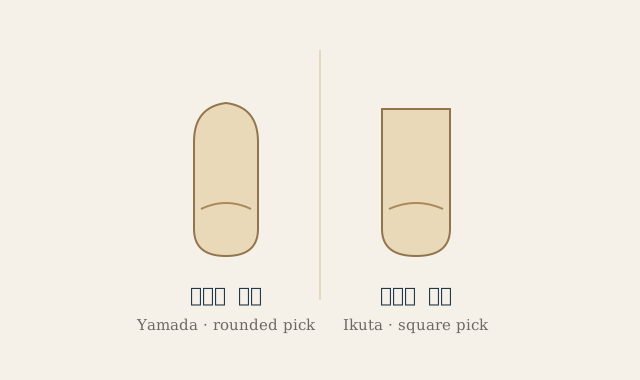
箏は右手の親指・人差し指・中指に箏爪をはめて弦を弾きます。山田流では先端が丸みを帯びて尖った丸爪、生田流では角のある角爪を用います。爪の形に合わせて弦への当て方や座る向きにも違いが生まれます。文化デジタルライブラリーは、生田流は箏に向かって斜めに、山田流は正面に座る基本姿勢を紹介しています。小さな爪の形にも、それぞれの音楽を育ててきた工夫が宿っています。
Koto players wear picks on the thumb, index finger, and middle finger of the right hand. The Yamada school uses rounded, gently pointed picks; the Ikuta school uses square-edged picks. Their shapes relate to how the strings are struck and how players sit at the instrument. These small tools reflect the distinct playing practices of each tradition.
第四章 CHAPTER 04
箏柱(ことじ)の役割
The Role of Koto Bridges
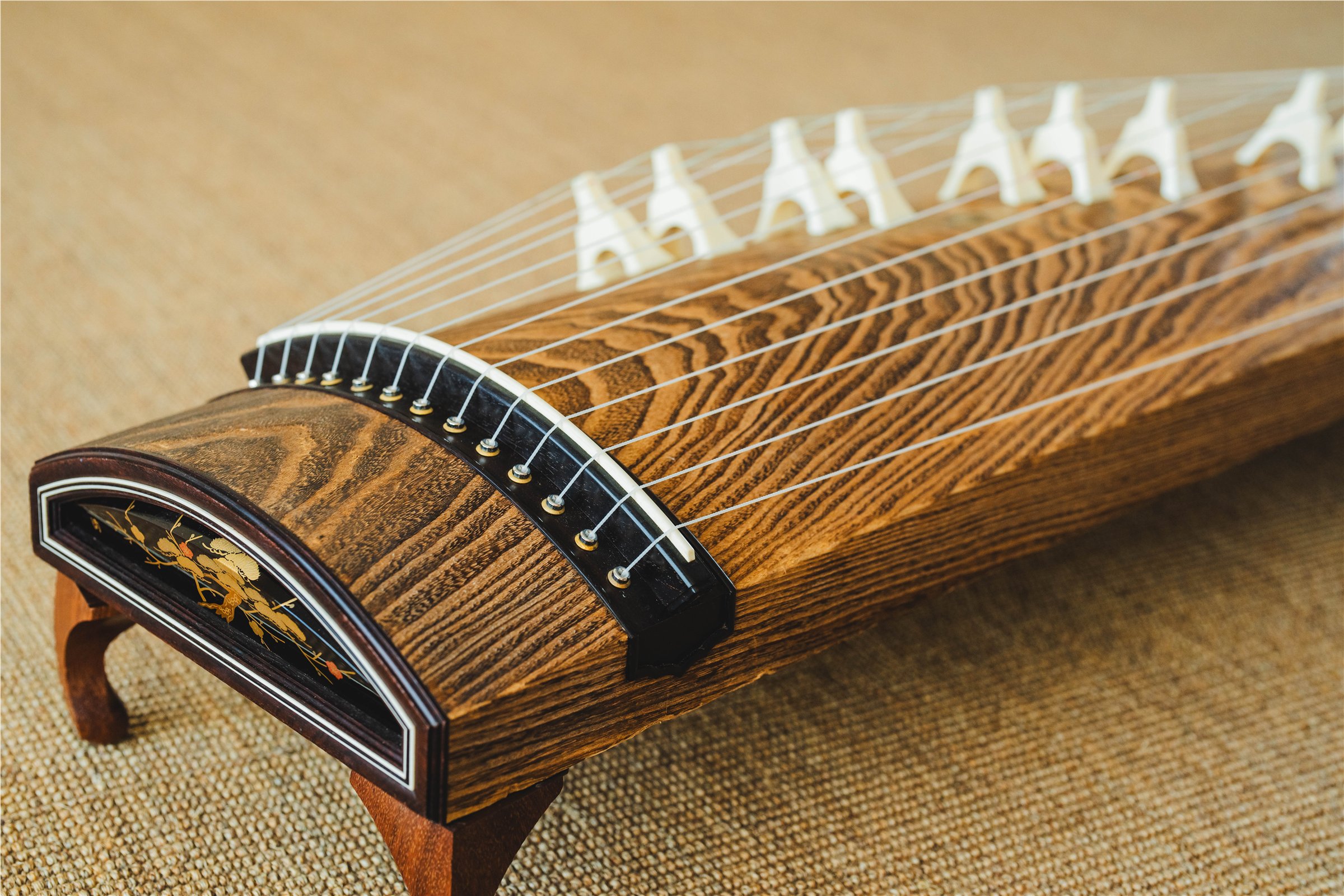
十三弦の箏には、それぞれの弦を支える箏柱(ことじ)を立てます。柱が弦を持ち上げ、その位置によって弾く部分の長さが変わるため、音の高さを調整できます。柱を右へ動かすと高く、左へ動かすと低くなります。曲や歌う人の声に合わせて調弦を変えられることは、箏ならではの魅力です。トップページの十三の弦は平調子の一例です。実際の箏では、奏でる前に一本ずつ柱の位置を確かめながら、響きを整えます。
Each of the thirteen strings rests on its own movable bridge, called a kotoji. Moving a bridge changes the length of the sounding string and therefore its pitch. Tuning can be adjusted for a piece or a singer's voice. The interactive strings on our home page offer one example of hira-jōshi, a traditional tuning; on a real koto, the bridges are carefully positioned before playing.
知ったあとに、もう一度その音色へ。
Return to the sound with a little more to listen for.
十三の弦に触れる Play the thirteen strings参考資料 References
- 国立国会図書館「ことのこと―箏と箏曲―」第2章National Diet Library, The Koto and Koto Music, Chapter 2
- 国立国会図書館「ことのこと―箏と箏曲―」第3章National Diet Library, The Koto and Koto Music, Chapter 3
- 文化デジタルライブラリー「箏曲」Japan Arts Council, Digital Library of Traditional Japanese Performing Arts: Koto Music
- 文化デジタルライブラリー「楽器図鑑・箏」Japan Arts Council, Musical Instruments: Koto
- 文化庁・国指定文化財等データベース「箏曲」Agency for Cultural Affairs, National Cultural Properties Database: Koto Music
箏爪の模式図は上記資料を参照して、このページのために制作しました。箏柱の写真はKoto.to提供です。The koto pick diagram was created for this page, informed by the references above. Bridge photograph courtesy of Koto.to.